
Introduction
Private consumer debt, including credit cards, personal loans, auto loans, and mortgages, affects millions of households worldwide. While credit cards offer convenience and perks, they can also act as a gateway to overspending and elevated debt levels, especially if not managed with caution.
Not all debt is equal: mortgages (and in some cases carefully managed student loans) can build long-term wealth, while credit card balances and payday loans are usually destructive. Understanding how consumer debt works, the pitfalls to avoid, and the psychology of credit card spending is key to staying financially healthy.
What Is Private Consumer Debt?
Consumer debt is any liability incurred for personal, family, or household needs (not for business or investments). It includes:
- Revolving debt (e.g., credit cards): borrowing and repaying repeatedly, with no fixed payoff date.
- Non-revolving debt (e.g., car or student loans): repaid in fixed installments until the balance is cleared.
Consumer debt is easy to access but often carries high interest rates, especially on credit cards and unsecured loans.
Rule of thumb: try to keep consumer debt payments below 20% of your monthly take-home pay. (Note: lenders often use a broader debt-to-income ratio based on gross income, where 36 – 43% is considered the upper acceptable range.)
Dangers of Accumulating Consumer Debt
Taking on excessive debt can jeopardize both your financial wellbeing and your mental health:
- High Interest Costs: Credit card rates average ~20% Annual Percentage Rate (APR) in the U.S., meaning a $5,000 balance with minimum payments could take 15+ years to clear and cost thousands in interest.
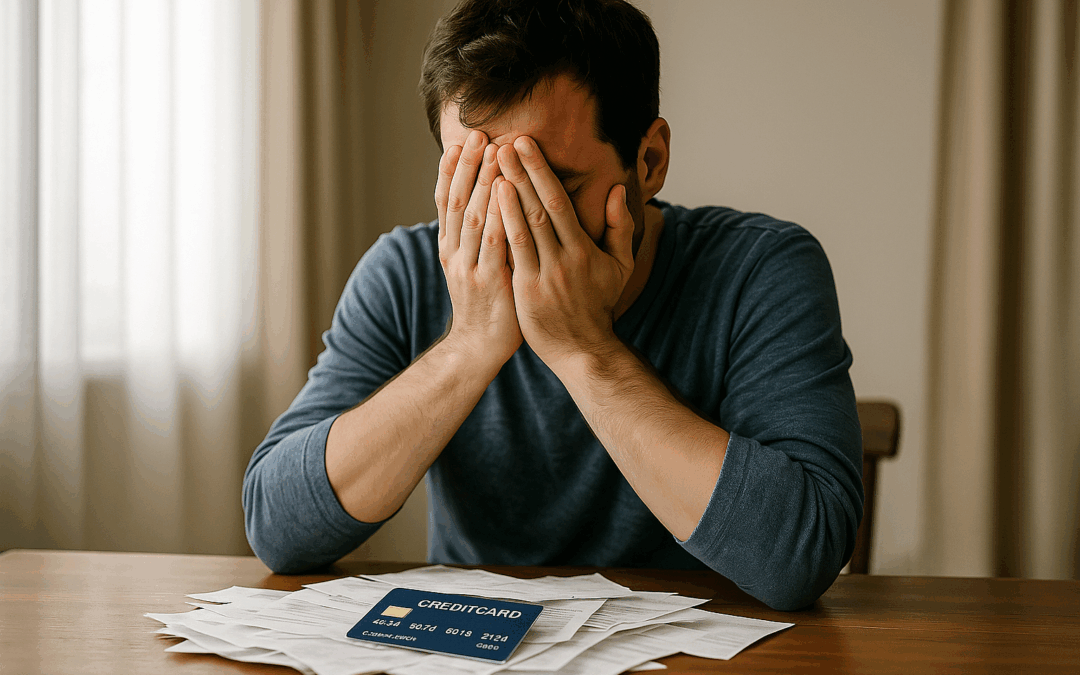
- Chronic Stress: Debt contributes to anxiety, sleep problems, strained relationships, and poorer health outcomes.
- Reduced Financial Flexibility: Debt payments eat into savings, investments, and your ability to handle emergencies.
- Risk of Default/Collection: Missed payments damage credit scores, trigger late fees, and may lead to collections or legal action.
- Credit Score Damage: High credit utilization (using most of your available limit) lowers your credit score. A good rule: keep utilization below 30%. Missing payments and carrying long-term balances both lower credit scores and can lead to denied credit later.
How Credit Cards Encourage More Spending
Behavioral research and neuroscience show why credit cards make overspending more likely:
- Reduced “Pain of Payment”: Paying with plastic feels less painful than handing over cash, encouraging larger purchases. Increasingly, ‘Buy Now, Pay Later’ services also encourage immediate consumption and can contribute to hidden consumer debt if not tracked closely.
- Brain Reward Activation: Studies (e.g., Knutson et al., 2007) show credit cards activate reward centers in the brain, similar to addictive behaviors.
- MIT Study: Prelec & Simester (2001) found people paid up to 100% more for the same product when using a card versus cash.
- Impulse Purchases: Cards encourage buying things you don’t need, especially in leisure categories like restaurants and travel.
What To Avoid in the First Place
- Impulse Buys: Credit amplifies emotional spending.
- Carrying Balances: Always pay in full to avoid interest.
- Maxed-Out Cards: High utilization hurts your credit score and creates a debt spiral.
- Minimum Payments: Most of your payment goes to interest, not principal, locking you into long repayment periods.
How To Get Out of Consumer Debt
There are proven strategies to manage and reduce debt:
- Budget and Track: Identify unnecessary spending and redirect to debt payoff.
- Avalanche Method: Pay off highest-interest debt first (mathematically optimal).
- Snowball Method: Pay off smallest balances first to gain momentum (psychologically motivating).
- Pay More Than Minimum: Even small extra payments shorten payoff time dramatically.
- Negotiate or Consolidate: Ask creditors for lower rates or consolidate into a lower-interest loan if available.
- Switch to Cash/Debit: Reduce reliance on cards to limit the “plastic effect.”
Final Thoughts
Credit cards can be useful tools when used wisely but dangerous if used unconsciously. Their psychological impact (reduced “pain” of spending and stronger reward activation) makes overspending a real risk.
Manage your consumer debt by:
- Budgeting carefully
- Paying off balances in full
- Avoiding impulse purchases
- Reinvesting in financial discipline
Golden rule: Use credit cards only for what you can afford to pay off each month. That way you enjoy the convenience and perks without falling into the debt trap.
Be mindful, stay disciplined, and keep your finances on track. Don’t let credit cards control your spending.