Introduction
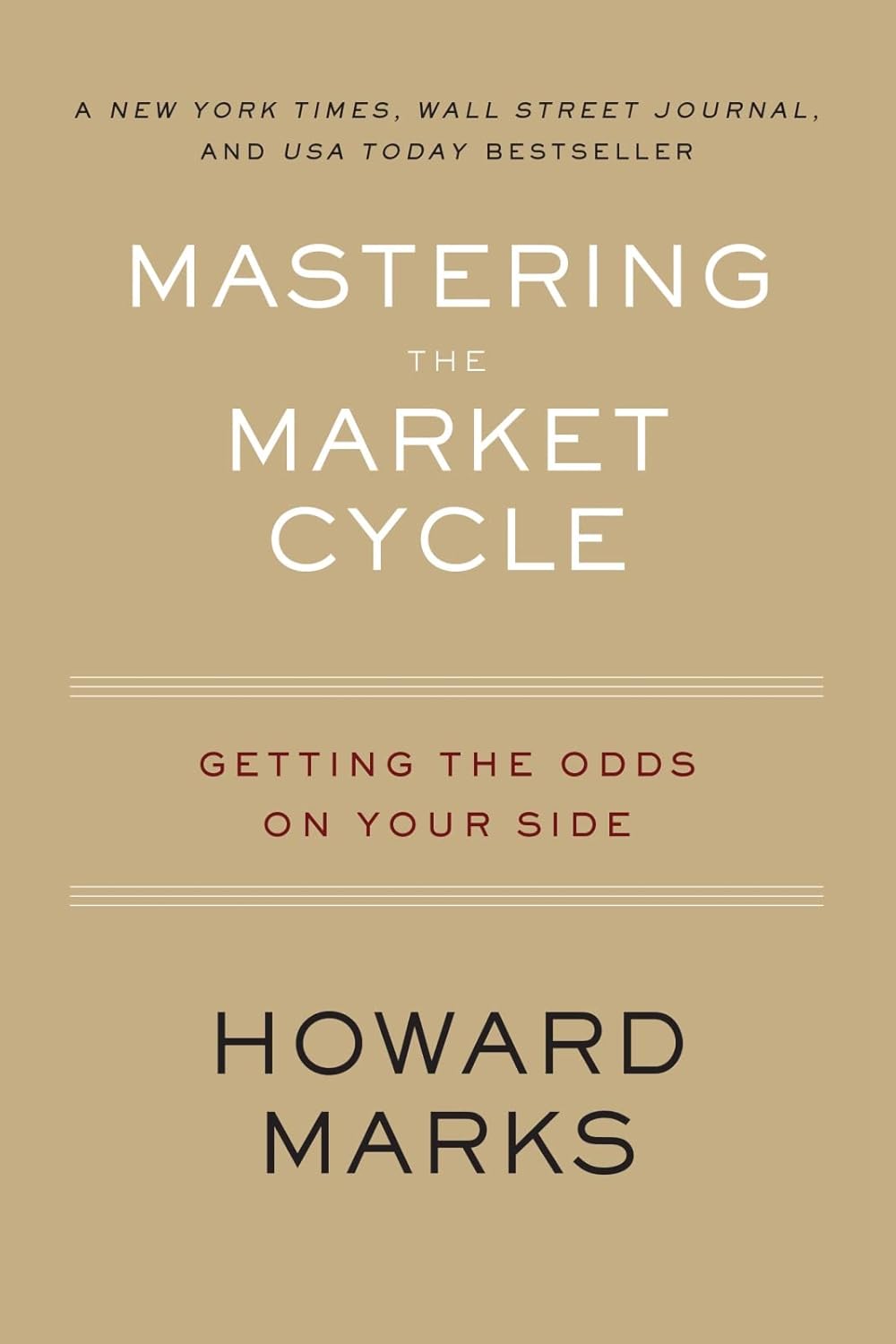
First published in 2018, Mastering the Market Cycle: Getting the Odds on Your Side is Howard Marks’s meditation on why financial markets ebb and flow. Marks, the co‑founder of Oaktree Capital Management and a respected investment memo writer, argues that investors cannot predict the future but can improve their odds by recognizing where we are in the cycle. This book is not a get‑rich‑quick manual but a thoughtful framework for understanding how economies, profits, credit and human psychology move through recurring phases. If you’re interested in building lasting wealth and avoiding common pitfalls, this book is well worth your time.
Summary of the Book
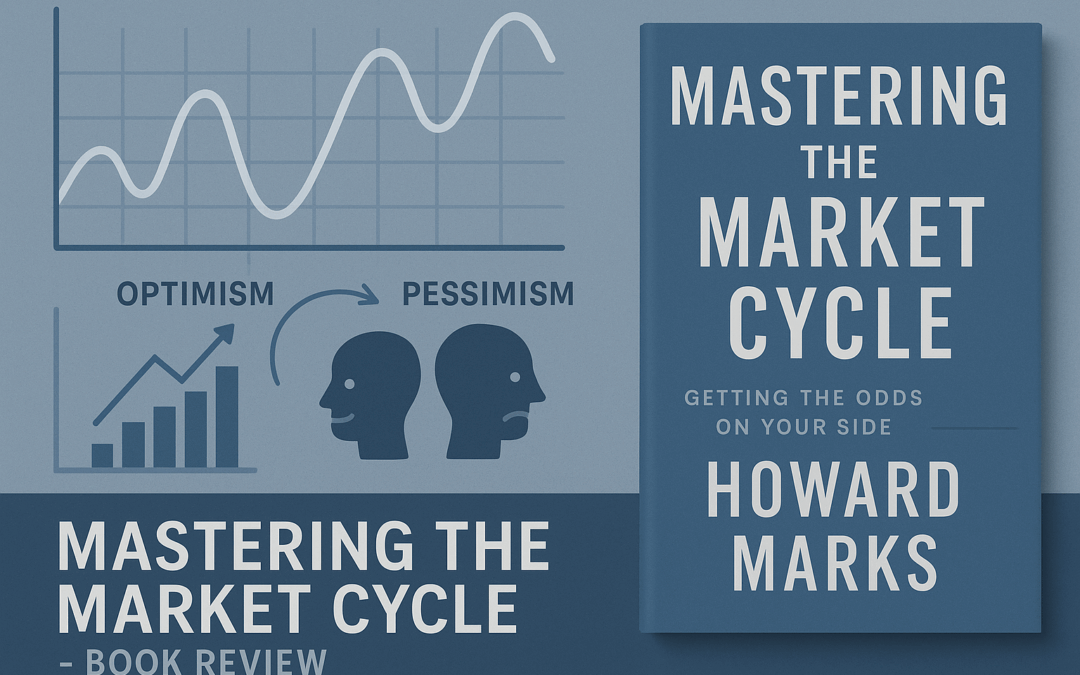
At its core, Marks’s book explores the patterns that underlie market behavior. Markets and economies do not advance in straight lines; they fluctuate because people swing between greed and fear. It is at the extremes of the cycle (very high optimism or pessimism), where investors can find the largest opportunity or risk.
Marks explains that these oscillations show up in several interlocking cycles:
- The economic cycle. Long‑term economic growth is driven by fundamentals like population growth and productivity, but short‑term expansions and recessions are influenced by consumer confidence and business investment.
- The profit cycle. Corporate profits tend to rise and fall more sharply than the overall economy, particularly in industries with high fixed costs or heavy leverage.
- The pendulum of investor psychology. Sentiment swings from optimism to pessimism, driving risk appetite and valuation levels to extremes.
- The risk and credit cycles. As investors become more or less willing to bear risk, credit availability expands or contracts, magnifying economic booms and busts. Marks devotes special attention to distressed‑debt investing and the real‑estate cycle, where long development lags lead to oversupply at exactly the wrong time.
Throughout the book he emphasizes that cycles are irregular and impossible to time precisely. However, by observing valuations, sentiment and credit conditions, investors can judge whether the odds are in their favor or against them and adjust their portfolios accordingly. It’s about cultivating a sense of where we are rather than forecasting where we’ll be. According to Marks, cycles are chains of cause-and-effect relationships” and not just irregular repetitions, but each phase sets up the next resulting in a complex interlocking set of cycles rather than isolated phenomena.
Marks’ distillation of the three stages of bull markets reinforces his cyclical view:
- Stage 1: only a few people believe things will get better.
- Stage 2: most investors realize improvement is taking place.
- Stage 3: everyone concludes things will get better forever.
Key Takeaways
- Understand the inevitability of cycles. Markets, economies and profits oscillate because human behavior oscillates. Recognizing that cycles are normal helps investors prepare mentally for downturns and resist euphoria during booms.
- Know where we are. Marks argues that while we cannot know the future, we must strive to assess the present. Examining valuations, investor sentiment and credit conditions can tell us whether we’re closer to a peak or a trough.
- Manage your own psychology. The biggest risk often comes from within. Superior investors maintain emotional balance, remain skeptical when others are euphoric and stay courageous when others are fearful.
- Balance risk and reward. Investing is the act of bearing risk in pursuit of profit. Marks emphasizes that risk is not just the probability of loss; it also includes opportunity cost. Investors should adjust their aggressiveness or defensiveness based on where the cycle appears to be.
- Appreciate the power of credit cycles. Small changes in the economy can cause large swings in credit availability, which in turn amplify booms and busts. Understanding the credit cycle helps investors anticipate when opportunities in distressed assets may arise.
- Success sows the seeds of failure. Prolonged success often leads to complacency, crowding and overvaluation. Contrarian opportunities usually appear in unpopular sectors or when pessimism is extreme.
What I Liked
Marks’s writing is clear and accessible, blending economic theory with practical examples. I appreciated his multidimensional view of cycles and his insistence that investors focus on odds rather than predictions. The discussion of investor psychology is particularly insightful; he doesn’t just describe greed and fear but explains how they influence credit spreads, risk premiums and valuations. I also enjoyed his case studies from Oaktree’s experience in distressed debt, which illustrate how contrarian thinking can pay off. Marks cautions that being contrarian only works when you are right – simply going against the crowd is not sufficient for success. Overall, the book strikes a balance between big‑picture philosophy and actionable advice.
Limitations or Challenges
While the book offers a compelling framework, it isn’t a step‑by‑step manual for timing markets. Marks freely admits that cycles are unpredictable, which can leave readers wanting more concrete rules. Some chapters can feel abstract, especially for beginners unfamiliar with terms like credit spreads or distressed debt. Readers looking for quick formulas or hot stock tips will be disappointed. This is a book about mindset and probability, not about beating the market each quarter.
Application to Long‑Term Investing
For readers of StoffelWealth.com, Mastering the Market Cycle dovetails neatly with our philosophy of patient wealth building, diversification and risk management. It reinforces the idea that investors should pay attention to valuations, sentiment and leverage rather than obsess over short‑term price movements. By calibrating your portfolio’s aggressiveness when the odds are in your favor and becoming more defensive when markets look frothy, you can improve long‑term outcomes. Furthermore, understanding cycles encourages patience to wait for the odds to be in your favor before making aggressive moves.
The book also underscores the importance of education and continual learning. Marks recommends reading widely and exchanging ideas with other investors. Whether you prefer passive index funds or actively manage part of your wealth, understanding cycles can help you stay grounded during inevitable market volatility.
Final Verdict
Rating: 4.5/5 – Highly recommended for thoughtful investors
Recommended for:
- Long‑term investors seeking to improve their understanding of market dynamics
- Students of market history and behavioral finance
- Contrarian investors looking for a framework to assess risk and reward
Not recommended for:
- Traders looking for short‑term strategies or timing signals
- Readers who prefer simple, step‑by‑step investment formulas
- Anyone uninterested in behavioral finance or macroeconomic context
Closing Thought
As Marks writes, “We may never know where we’re going, but we’d better have a good idea where we are.” Reading this book is a valuable step toward developing that awareness and making better‑informed investing decisions.