

Money Talk at the Dinner Table: 10 Questions to Build Financial Confidence in Kids
Money wasn’t always an open topic growing up. Usually, it only came up during problems or was kept behind closed doors altogether. Yet, many of our core money habits and attitudes are shaped by an early age. If we want our children to be confident and capable with...

Feeling Rich vs. Looking Rich: What Drives Our Desire for Status?
In today's society, our relationship with wealth is more complex than ever. Do we crave feeling rich - knowing we are wealthier than our peers - or is our motivation rooted in looking rich - being perceived as wealthy by others? The academic study "Feeling Rich or...

Private Consumer Debt: How Credit Cards Drive Overspending and What You Should Avoid
Private consumer debt, including credit cards, personal loans, auto loans, and mortgages, affects millions of households worldwide. While credit cards offer convenience and perks, they can also act as a gateway to overspending and elevated debt levels, especially if...

Would You Retire Today If You Could Afford It?
The allure of early retirement is powerful: freedom from the grind, autonomy over your time, and the chance to finally do everything your job never let you. But what really happens when you leave the rat race far earlier than most? Is early retirement the endless...

Track Every Dollar: Why Knowing Your Expenses Is Essential for Financial Health
For most people, income is easy to track. Your salary gets deposited once or twice a month, and you can see the number in your bank account. But when it comes to expenses - the money going out - many of us are flying blind. It’s not uncommon to hear someone say, “I...

School vs Life: Why Basic Financial Skills Are Missing in Education – and What Parents Can Do
Despite over a decade of schooling, many young adults graduate without knowing how to budget, save, or handle credit. Basic financial skills – arguably as essential as math or reading – are largely missing from formal education. The results are telling: according to...

Why Young People Are Financially Illiterate and What We Can Do About It
“Being financially literate is just as important as knowing how to read and write.”Annamaria Lusardi, Stanford University Financial literacy isn't a luxury; it's a life skill. Yet, the data shows that most young people today are woefully underprepared to manage...

Don’t Outsource Financial Literacy
Over the years I have spent investing and trading, I have observed something that holds true across every level of wealth and sophistication: the people who come out best are rarely the ones with the most capital, or the most complex portfolios. They are the ones who...
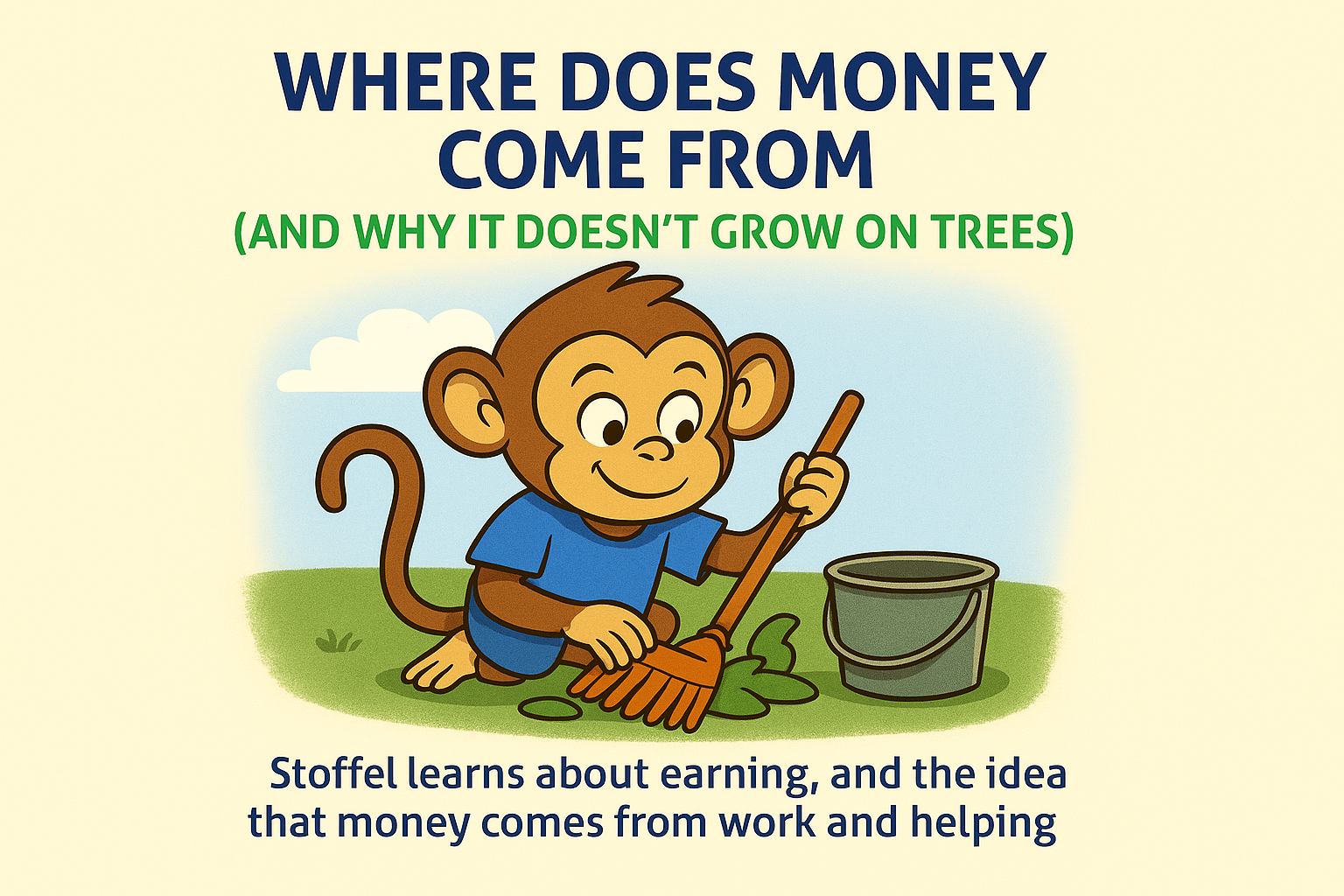
Where Does Money Come From? (And Why It Doesn’t Grow on Trees)
A Note to Parents By now, your child understands how to save and spend, spot needs versus wants, and even make a mini budget. Now it’s time to talk about where money actually comes from - and why it doesn’t magically appear. This post introduces the concept of...

What Is a Budget? (For Kids!)
A Note to Parents Now that your child understands how to save and spend - and how to tell needs from wants - it's time to introduce another key financial skill: budgeting. Think of budgeting as a simple plan that shows kids how to use their money on purpose instead of...

Needs vs Wants: Helping Kids Make Smart Money Choices
A Note to Parents As your child becomes more familiar with saving and spending, the next step is teaching them how to tell the difference between a need and a want. Understanding this difference builds decision-making skills and helps kids prioritize spending – a...
Save or Spend? Helping Kids Make Smart Money Choices
A Note to Parents Once your child starts receiving a regular allowance and learns that money can grow (thanks to the magic of compounding), the next natural step is helping them decide what to do with their money. Should they spend it now on something fun? Or should...
Disclaimer
I am not a qualified licensed investment advisor but a private retail investor with a broader interest in financial literacy. All information and content provided here, including any thoughts and ideas, opinions, forecasts and predictions, suggestions, or investment picks expressed or implied herein, are for informational, entertainment or educational purposes only and should not be construed as personal investment advice. While the information provided is believed to be accurate, it may include errors or inaccuracies.
I will not and cannot be held liable for any actions you take as a result of anything you read here. Conduct your own due diligence or consult a licensed financial advisor or broker before making any and all investment decisions. Any investments, trades, or other decisions made on the basis of any information found on this site are executed at your own risk.
StoffelWealth.com is my personal blog focused on retail investing reflecting my personal views. No representations or warranties are made with respect to the accuracy or completeness of the content of this entire blog, including any links to other sites. The links provided are maintained by their respective organizations and they are solely responsible for their content. All information presented here is provided ‘as is’, without warranty of any kind, expressed or implied.