
Introduction
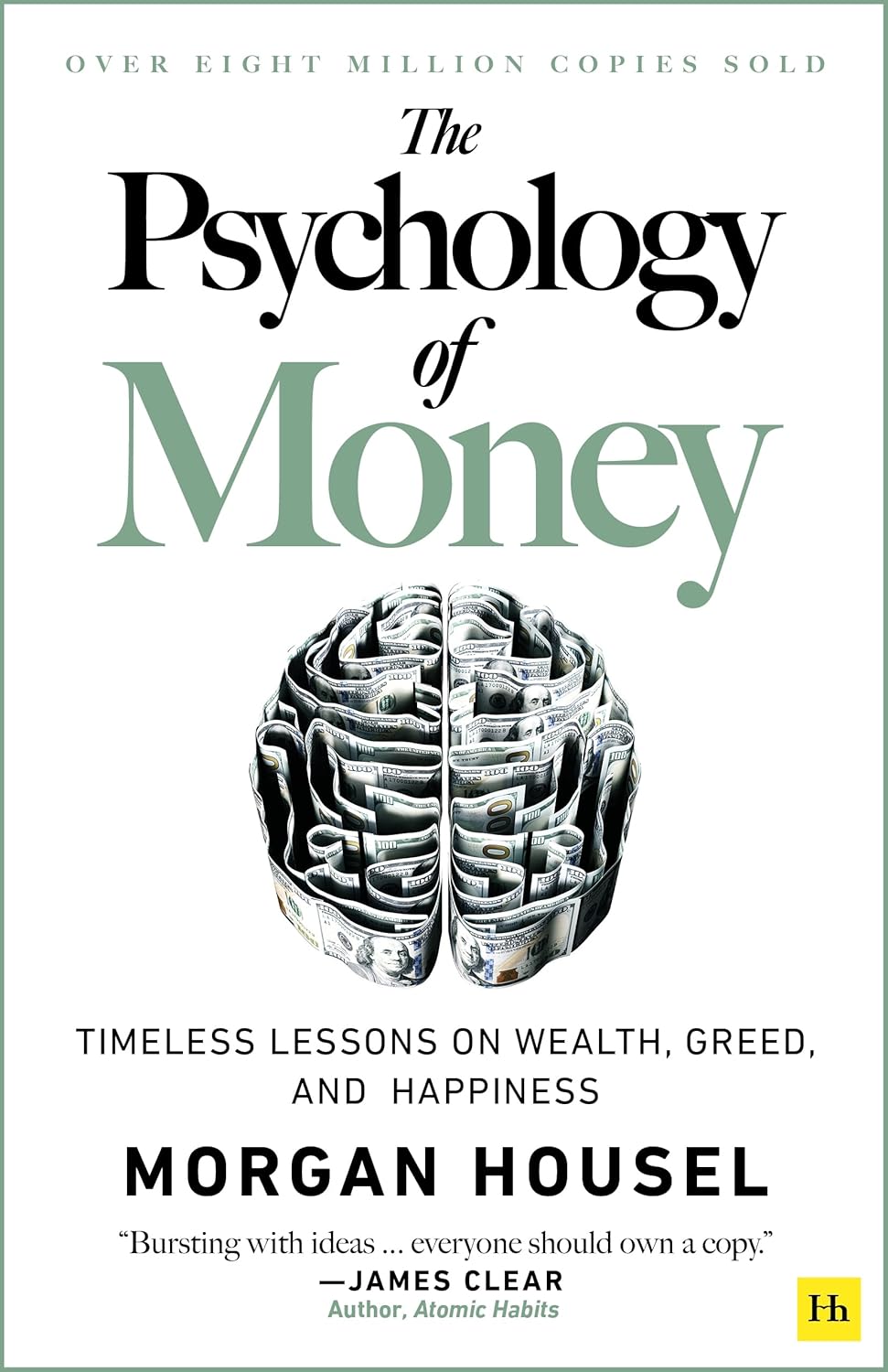
First published in September 2020, The Psychology of Money: Timeless Lessons on Wealth, Greed, and Happiness quickly became a modern classic in personal finance literature. Morgan Housel, a former columnist at The Wall Street Journal and The Motley Fool, currently a partner at Collaborative Fund, argues that financial success depends more on behaviour than market knowledge: it’s about how people think, act, and feel about money.
This book isn’t a technical manual on investing, but rather a collection of 19 short essays illustrating how human psychology shapes financial outcomes. For those seeking insight into why people make irrational decisions about money and how to manage their own biases, Housel’s work is essential.
Summary of the Book
Housel’s central thesis is straightforward: money isn’t primarily about numbers. It’s about behaviour. Our experiences, upbringing, and emotions shape how we save, invest, and spend, often more than any spreadsheet can.
The book unfolds through several interconnected themes:
- Luck and risk: Bill Gates and Paul Allen’s success is highlighted as a product of rare opportunity and circumstance. Housel stresses that luck and privilege play critical roles, reminding readers that risk isn’t always visible.
- Compounding: Wealth results from patience and long-time horizons, as exemplified by Warren Buffett. His fortune is a testament to the power of compounding over decades.
- Tail events: A small number of outcomes drive much of life’s results; in investing, a few major decisions have outsized impacts.
- Enough: Knowing what “enough” means for oneself is vital; unchecked ambition can lead to ruin.
- Freedom: The ultimate form of wealth is control over your time, not just maximizing returns, but gaining life flexibility.
- Behavior over intellect: A genius with poor temperament can go broke, while an average investor with discipline can thrive.
- Wealth vs. Rich: Housel distinguishes between being rich and being wealthy. “Rich is current income. Wealth is assets not spent – freedom and options”.
- Saving: More important than extraordinary income is the ability to save and avoid lifestyle inflation.
- Reasonable vs. Rational: Financial plans should fit a person’s psychology; being “reasonable” is more sustainable than trying to be perfectly rational all the time.
- The role of pessimism: Pessimistic stories often sound more convincing, but optimism and endurance win in the long term. Housel stresses that optimism doesn’t mean blind faith, it’s optimism with room for setbacks
Each essay stands on its own, but together they form a compelling narrative on money as a human story influenced by emotion and circumstance.
Key Takeaways
- Compounding is powerful but requires patience. The best results come after decades, not years.
- Wealth is what you don’t see; flashy spending isn’t a sign of true financial health. Hidden savings and investments matter more.
- Tail events shape outcomes. Protecting against downside risk and staying invested are key to benefitting from upside potential.
- Define “enough;” without limits, ambition can turn into destructive greed.
- Freedom – the ability to control time and choices – is the greatest dividend.
- Behaviour beats knowledge. Temperament, humility, and discipline matter more than intelligence or technical expertise.
- Saving is the foundation of wealth; even ordinary incomes can support extraordinary outcomes over time.
- Being reasonable by setting rules and systems that fit one’s psychology is more effective than being flawlessly rational.
- Optimism and endurance, i.e. surviving and staying invested through ups and downs, is itself a winning strategy.
What I Liked
Housel’s writing is accessible, concise, and filled with memorable anecdotes. He blends lessons from history, business, and everyday life, avoiding jargon and complex formulas. The chapters are short and digestible, and illustrations featuring Gates, Buffett, and the dangers of envy underscore how deeply psychology shapes financial decisions.
Limitations or Challenges
Readers seeking technical investing strategies, formulas, asset allocation models, or stock-picking guidance may find the book lacking in specifics. Some experienced investors may find the lessons familiar or self-evident. While most examples are U.S.-centric, the core principles are framed as universal. Because it’s broadly principle-based, some readers may wish for more direct actionable steps or frameworks.
Application to Long-Term Investing
For readers of StoffelWealth.com, The Psychology of Money reinforces the philosophy that wealth is achieved through patience, discipline, and a deep understanding of one’s own biases. It reminds us that investing is less about predicting the next hot stock and more about managing our behaviour and expectations:
- Staying invested long enough to benefit from compounding.
- Avoiding envy and unproductive comparison.
- Defining “enough” personally to avoid unnecessary risk-taking.
- Creating systems to protect against impulsive decisions.
- Prioritizing saving and resilience over perfect predictions.
This book aligns with the StoffelWealth ethos of slow, steady, and mindful wealth-building.
Final Verdict
Rating: 5/5 – Essential reading for anyone serious about understanding money.
Recommended for:
- Individual investors and families seeking to build healthy financial habits.
- Anyone working to overcome emotional or impulsive money decisions.
- Readers who prefer stories and wisdom over technical analysis.
Not recommended for:
- Traders seeking quick strategies or market-timing signals.
- Readers wanting a how-to manual for specific investments.
Closing Thought
As Housel writes, “Financial success is not a hard science. It’s a soft skill, where how you behave is more important than what you know”. Mastering your own psychology is perhaps the most important investment decision you can ever make.