
For most people, income is easy to track. Your salary gets deposited once or twice a month, and you can see the number in your bank account. But when it comes to expenses – the money going out – many of us are flying blind.
It’s not uncommon to hear someone say, “I don’t know where all my money goes.” That statement alone reveals a huge problem: lack of visibility into spending. And without knowing where your money goes, how can you ever control it?
In this article, we’ll explore why tracking your expenses is critical to building financial well-being, how you can start today, and why the method doesn’t matter as much as the habit.
Why You Must Know Where Your Money Goes
Imagine trying to lose weight without knowing how many calories you eat each day. Or trying to train for a marathon without tracking your runs. Managing your money is no different.
Here’s why expense tracking is so important:
✅Awareness: You can’t fix what you don’t see. Tracking expenses highlights spending patterns and helps identify leaks.
✅ Control: Knowing your spending allows you to consciously adjust it – whether cutting down on takeout, subscriptions, or impulse buys.
✅ Budgeting: A realistic budget starts with understanding your actual expenses, not guesses.
✅Savings & Goals: If you want to save or invest, you need to know what’s left over – and where to find room for improvement.
✅ Stress Reduction: When you’re in control, money becomes less of a mystery and more of a tool.
What Happens When You Don’t Track
If you are not tracking your expenses, you might be living paycheck to paycheck without knowing why. Small purchases – coffee, streaming services, ride shares – add up quickly. And bigger, less frequent costs – insurance, school fees, gifts, or car repairs – can catch you off guard if you’re not planning for them.
This blind spot can lead to:
- Overspending
- Missed savings goals
- Debt accumulation
- Anxiety around money
- Relationship tension
Simply put: not knowing is expensive.
How to Start Tracking Your Expenses
There’s no perfect way to track expenses – the best method is the one you’ll actually stick to. Here are three common options:
- Expense Tracking Apps
There are many apps designed to sync with your accounts, categorize spending, and provide insights. Examples include:
These apps are great for automation, categorization, and generating visual reports like trend reporting graphs and alerts about overspending.
Be careful to check the pricing of individual apps. Some apps like Money Manager and Spendee have both free versions and paid tiers. Apps such as YNAB come with a free trial but then charge an ongoing fee of $14.99/month or $109/year as of July 2025.
Also check data privacy and security settings of your selected app if this is a concern for you.
- Spreadsheets
If you prefer a hands-on approach like me, a simple spreadsheet can do wonders. Create categories, set monthly targets, and manually log expenses. It’s more effort but that effort increases awareness.
- Pen & Paper or Journal
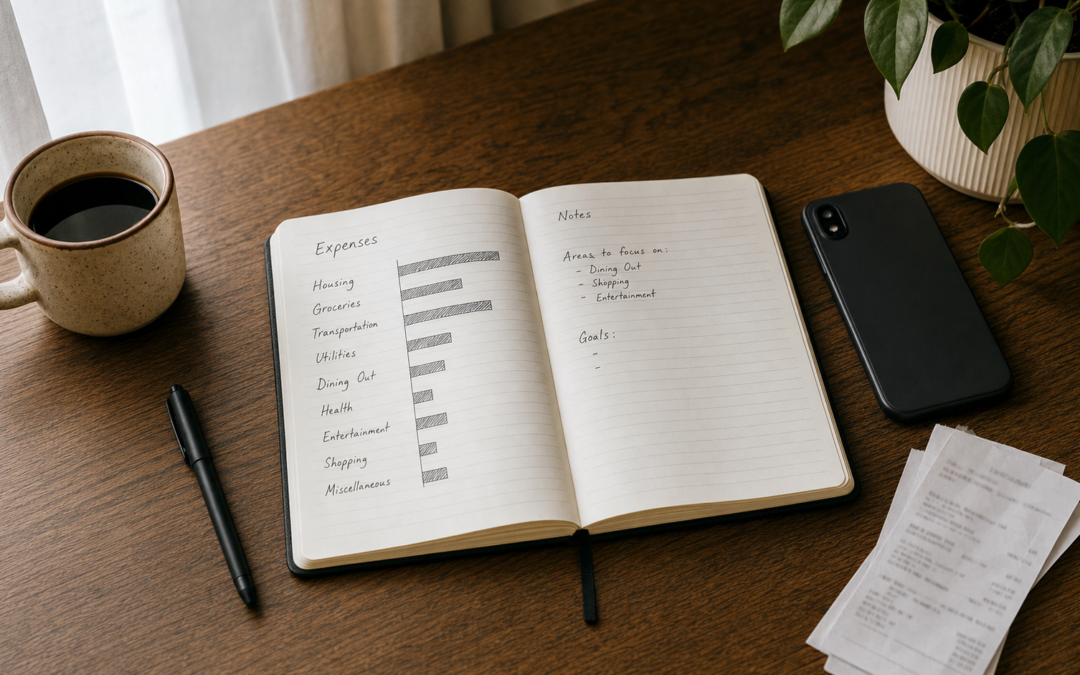
Some people love the tactile and personal feel of a notebook. Write down each expense daily. It may be low-tech, but it builds strong habits and works for many.
What to Track
Be as detailed as you reasonably can. Start with these categories:
- Fixed Costs: Rent, mortgage, utilities, insurance
- Variable Costs: Food, transportation, shopping, entertainment
- Occasional Costs: Medical bills, school fees, gifts, subscriptions
- Discretionary Spending: Impulse buys, hobbies, takeout, etc.
Consider adding notes for unexpected or emotional purchases – it helps you understand your habits better.
The Habit Matters More Than the Tool
Don’t overthink the method. You can switch apps, redesign your spreadsheet, or simplify your process later. The real value comes from consistency. Track daily, weekly, or monthly – whatever fits your rhythm – but make it regular.
Set a weekly reminder to review your expenses. Celebrate progress and course-correct when needed. Over time, you’ll be amazed at how much clarity and control this small habit brings.
A positive side effect of regular expense tracking is that it not only helps with savings but also with building an emergency fund, which is another important aspect of your financial wellbeing.
Final Takeaway
Tracking your expenses is one of the most powerful steps you can take toward financial freedom. It brings awareness, control, and confidence into your money life. Whether you use an app, a spreadsheet, or a notebook doesn’t matter as much as building the habit.
Start today. Your future self will thank you.